Products
RIC Instrument | Hansaton RIC Receivers & Parts – Compatibility Guide
If you’re looking for a Hansaton RIC instrument replacement part, you’re usually trying to solve one simple problem: getting the right receiver (speaker) and matching RIC components for your hearing aid so everything fits and sounds correct. This guide explains what Hansaton “RIC” means, how compatibility typically works, and what to check before you choose a replacement.
What is a Hansaton RIC instrument?
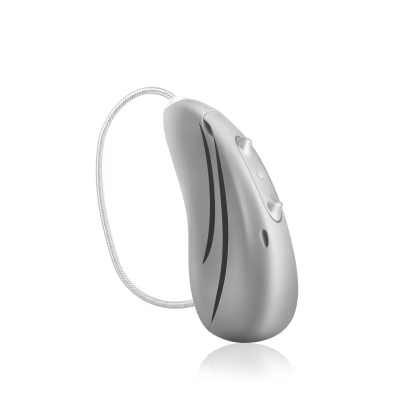
RIC stands for Receiver-in-Canal. With a Hansaton RIC hearing aid, the main device sits behind the ear, while the receiver (speaker) sits in the ear canal and is connected by a thin wire. The “RIC instrument” parts most people replace are:
Receiver (speaker) module (often the key component)
Receiver wire/lead (typically part of the receiver assembly)
Retention lock (keeps the receiver stable in the ear)
Domes (ear tips that fit on the receiver)
Wax protection (filters/guards that protect the receiver opening)
This page focuses on Hansaton RIC receivers and RIC-related parts—the items that must match your device and your existing setup.
Which Hansaton hearing aids use RIC receivers?
Many Hansaton models are available in a RIC style. The exact receiver type depends on the specific platform and generation of your hearing aid. Because receiver connectors and pin layouts can differ between families, the safest approach is to identify the receiver you currently use and match it.
If you’re unsure whether your hearing aid is a RIC model, look for these signs:
A thin wire running from the behind-the-ear unit to the ear canal
A dome or custom earmold attached to a small speaker at the end of the wire
A receiver that can often be detached/replaced (depending on model)
Hansaton RIC compatibility: what must match
When choosing a Hansaton RIC receiver or related part, compatibility usually comes down to a few non-negotiable details:
1) Receiver connector type (the most important)
Receivers are not universally interchangeable across all hearing aid families. The connector must match your Hansaton RIC hearing aid exactly. If the connector doesn’t match, the receiver won’t click in properly, won’t be recognized, or may not work at all.
2) Power level (e.g., standard vs power)
RIC receivers often come in different output strengths. If you replace a receiver with the wrong power level, you may experience lower volume, distortion, feedback (whistling), or a poor fit with your dome/earmold.
3) Wire length (left/right + length code)
Receiver wires come in different lengths. Too short can pull and feel uncomfortable; too long can sit poorly or snag. Match the length marking on your current receiver whenever possible.
4) Ear-side parts: dome and wax protection system
Your receiver must be compatible with your dome type and your wax protection (filter/guard). Even if a receiver fits the hearing aid body, the wrong dome/wax system can lead to poor comfort, weak sound, or frequent blockage.
How to identify the receiver you have now (so you buy the right one)
The quickest way to choose correctly is to check the markings on your current receiver/wire. Many receivers have small printed codes indicating:
Side (L or R)
Length (often a number)
Power level (may be abbreviated)
If the print is worn off, another reliable method is to compare the connector shape and housing to a matching product photo, or to use your hearing aid’s model name (from paperwork or the fitting app) as a starting point.
Choosing the right Hansaton RIC instrument receiver
If you’re replacing a receiver because of crackling, dropouts, or no sound, it’s usually best to replace like-for-like (same connector type, same power, same length). Consider these scenarios:
“It worked fine before; it just stopped.” Choose the same receiver specification you have now.
“I’m getting feedback and poor bass.” Check that your dome size/type and wax protection are correct and not blocked; only change receiver power if advised by a professional.
“The wire feels too short/too long.” Keep the same connector and power, but choose a different wire length.
Common Hansaton RIC problems (and what to try first)
No sound / weak sound
Replace the wax filter/guard first (blockage is common)
Try a new dome (wax or moisture can clog the sound outlet)
If the issue persists, the receiver may be failing
Crackling / intermittent sound
Inspect the receiver wire for kinks or damage
Check for moisture and ensure the receiver is seated securely
If it continues, a receiver replacement is often the fix
Whistling (feedback)
Check that the dome fits snugly and is the right style
Check wax protection and clean/replace as needed
If you recently changed dome type, you may need a different fit solution
Buy Hansaton RIC instrument parts with confidence
To avoid ordering the wrong part, match your current receiver’s connector type, side (L/R), wire length, and power level. If you can share the receiver code or a clear photo of the connector and printed markings, it becomes much easier to confirm the correct match before purchase.
FAQ: Hansaton RIC instruments and receivers
Are all Hansaton RIC receivers interchangeable?
No. Even within the same brand, different hearing aid families can use different receiver connectors and systems. Always match the receiver type used by your specific Hansaton RIC model.
Do I need left and right specific receivers?
Yes, RIC receivers are typically ear-specific (left vs right). Make sure you select the correct side.
Should I change the receiver power level when replacing?
Usually no—replace like-for-like unless your hearing care professional recommends a change based on your hearing loss and fitting.
If my sound is weak, do I definitely need a new receiver?
Not always. Wax blockage is very common, so replace the wax protection and check the dome first. If the problem continues, a receiver replacement is the next typical step.
What else should I replace at the same time?
It’s often smart to replace domes and wax guards when you install a new receiver, so you start with a clean, well-sealing setup.